
What ADLs and IADLs Mean for Your Loved Ones Care
If you’ve researched care options for a loved one or sat in a doctor’s office with them, you may have come across two terms: ADLs and IALDs. These terms show up in insurance paperwork, care assessments, and medical records.
Whether you’re determining what care your parent needs, building a care plan for your spouse, or thinking ahead for yourself, understanding these terms can help you become a better advocate.
What are ADLs and IADLs?
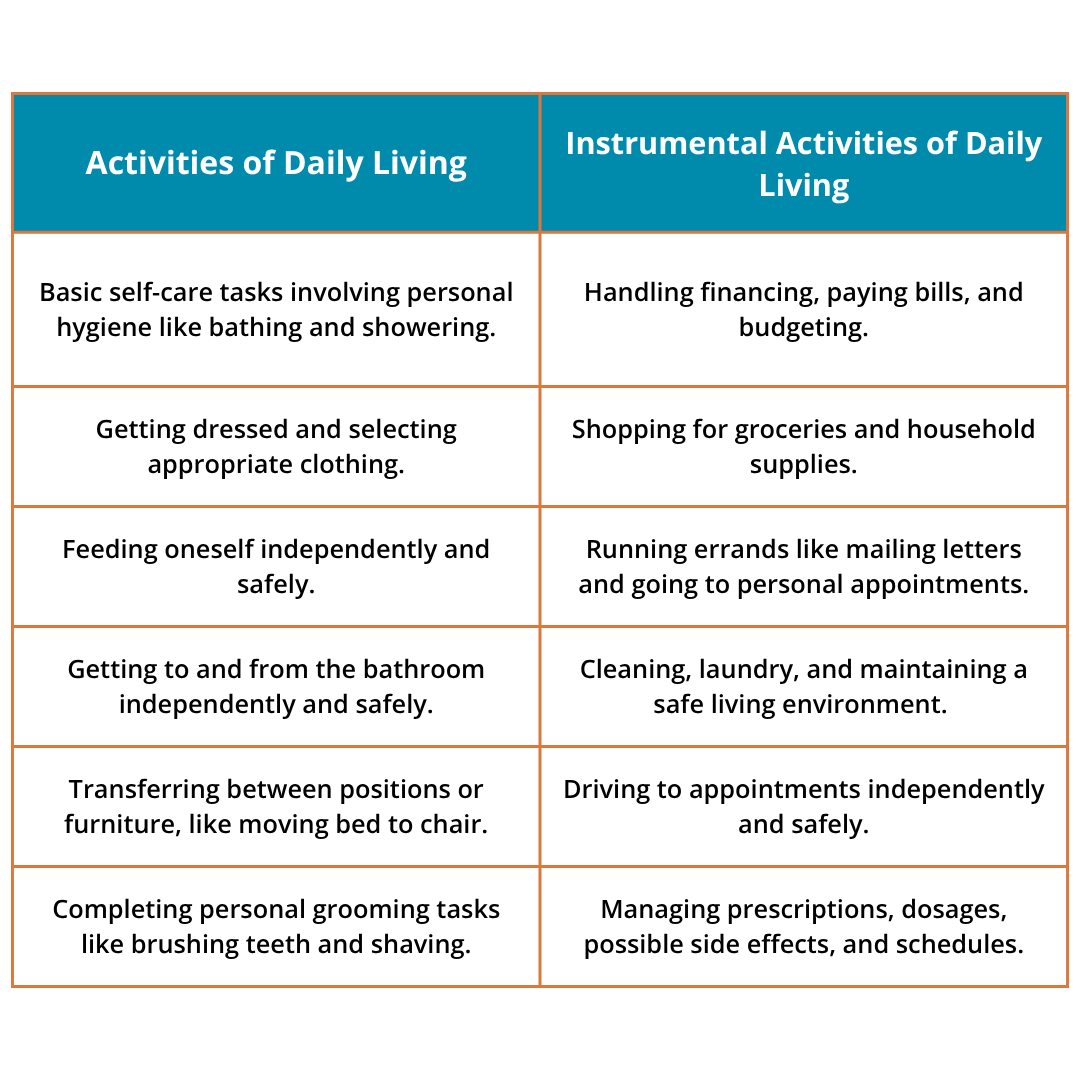
ADL stands for Activities of Daily Living. Simply put, these are everyday physical tasks a person needs to do to take care of themselves. This includes building blocks of independence, things like getting out of bed, getting dressed, and feeding yourself. Most of us do these things automatically, but for someone dealing with aging, illness, or injury, they can become difficult.
IADLs stands for Instrumental Activities of Daily Living. These are more complex tasks that go beyond basic self-care and allow someone to live independently in the real world. This involves things like paying bills, managing prescriptions, or getting to a doctor’s appointment. This term can appear in insurance documents or care assessments when trying to determine the level of care needed.
What’s the difference between ADLs and IADLs?
ADLs are about the body and if your loved one can physically take care of themselves. IADLs are about the mind and logistics, and whether they can manage the tasks that keep their life running.
Both are used by doctors, insurers, and care agencies to determine what level of support someone needs.
What to do if you’re noticing changes
Changes don’t always announce themselves clearly. Sometimes it’s a series of small things you notice over time. Here’s what to watch for across three areas:
- Physical changes: Falling more frequently, moving slowly, or struggling with tasks like dressing, showering, or eating are all noteworthy. Chronic health conditions that require ongoing management, like diabetes or heart disease, can also increase care needs over time.
- Cognitive changes: Confusion, memory lapses, or difficulty following conversations can be early signs of dementia or other cognitive decline.
- Emotional changes: Social withdrawal, sudden loss of interest in hobbies, or seeming down or anxious are also important signs. These changes affect IADLs first, and they’re easy to dismiss as “just getting older” when they may actually signal something more.
- Home environment: Take a look around the next time you visit. Piled up mail, cluttered or dirty surfaces, poor lighting, or expired food can all be signs that day to day tasks are slipping. Leaving the stove on, missing medications, or neglecting personal hygiene are serious warning signs that shouldn’t be ignored.
Here are some steps to consider:
- Talk to their doctor. A physician can assess whether there’s an underlying medical cause and refer your loved one for further evaluation. It can help to bring specific examples of what you’ve noticed, since doctors rely on this kind of firsthand information to get clearer picture.
- Request a professional care assessment. An in-home care agency can evaluate your loved one’s ADL and IADL needs and recommend a level of support that fits their situation, whether that’s a few hours a week or more consistent daily help.
- Start the conversation early. These discussions are easier when there’s no immediate crisis. Talking openly about care preferences before they’re urgently needed gives everyone more time to make thoughtful, informed choices rather than rushed ones.
How in-home care services can help
In-home care offers professional support that allows aging adults to navigate these challenges in the comfort of their home. LifeWorx caregivers are trained to assist with both ADLs and IADLs, and services are tailored to your loved one’s specific needs. The goal is to support independence, so your loved one feels helped, not managed. Contact a member of our team today to learn more.
Related Resources

What is the Difference Between ADL and IADL?
Healthcare professionals and doctors understand the definition of IADLs and ADLs when it comes to caring for older adults, but do you? As elderly adults age, it’s crucial to discover whether they’re having any issues and you need to know which daily activities they can handle on their own, and which…

Recognizing the Early Signs of Dementia
Dementia is a progressive condition that affects memory, cognition, and behavior, often beginning with minor changes that can be difficult to recognize. Identifying these early warning signs is important, as early diagnosis allows for better treatment options. The LifeWorx team has put together…

Understanding In-Home Care
As our loved ones age, making sure they receive the best care possible becomes a top priority. For many families, in-home care offers the best solution by providing personalized and professional assistance in the comfort of one’s home. At LifeWorx, our services include 24-hour care, companion care…

Understanding Stand-By vs. Hands-On Assistance
Many people believe that long-term care insurance benefits are only available when someone is completely unable to care for themselves. In reality, qualifying for benefits is more nuanced. Insurers look for specific types of assistance needed with daily tasks, not just total physical incapacity. A…