
Using Retirement Savings to Pay for a Parent’s Care

At some point, many adult children find themselves watching a parent need more help than expected while trying to protect the retirement they’ve spent decades building. It’s an uncomfortable position, and it’s more common than most people realize.
For people in the sandwich generation who are supporting aging parents while raising children, the pressure can feel especially intense. Paying for a parent’s care may compete with college costs, everyday expenses, debt payments, and your own retirement goals. Recognizing these overlapping responsibilities can help you set realistic boundaries, involve siblings or relatives, and choose a plan that supports your parent without putting your retirement savings at unnecessary risk.
This is a general overview of how to think through this decision. It is not personalized financial or tax advice. Rules about retirement accounts, penalties, and taxes can change and depend on your situation, so check with a financial planner or tax professional before deciding.
What it really means to use retirement savings
When people talk about using retirement savings to help a parent, they usually mean one of a few things:
- Withdrawing funds early, before typical retirement age
- Borrowing against a retirement account, if the plan allows it
- Leaving retirement savings untouched and finding the money elsewhere, such as through the parent’s own assets, insurance, or other family resources
Each option has its own pros and cons. The best choice depends on your age, the type of account you have, how urgent the need is, how long your parent will need support, and the total cost over time. The main thing is to pick the option that fits your situation and keeps costs as low as possible.
The real cost of tapping retirement funds early
If you take money out of a retirement account before the usual retirement age, you will probably owe income tax on what you withdraw, plus an extra penalty. Even if you are allowed to withdraw, taxes and penalties can reduce how much actually goes toward your parent’s care, so weigh that cost before deciding.
Another cost is lost growth. Retirement savings grow because the money earns returns year after year. If you take money out now, it stops growing, and you lose out on future earnings.
For example, if you take out $10,000 today, you lose more than just that money. You also lose the growth it could have earned over the next 10 or 15 years if you left it invested. Depending on the returns, the lost growth could be worth more than what you took out, so compare the immediate need with the long-term cost before deciding.
Rules change, so check with a professional
Tax laws and retirement account rules about long-term care and early withdrawals can change. The rules you see today may be adjusted, expanded, or replaced by the time you make this decision. There are many details and getting them wrong can be expensive. A financial planner or tax professional can help you sort out the current rules.
Having a short conversation with a financial planner or tax professional can be very helpful. They can explain, based on current rules and your specific accounts, what a withdrawal would really cost after taxes and penalties. They can also tell you whether any new rules apply to your situation, so you can judge the options more clearly.
Other ways to fund long-term care
Before you decide to use your retirement savings, pause and look at your whole financial situation.
Long-term care insurance: If your parent has a long-term care policy, it might pay for some or all of their in-home care, depending on the policy. This is usually the first thing to check, since it can make a big difference before you use your own money.
Your parent’s own assets and income: Many people think they need to cover the gap themselves, but often families have not fully checked a parent’s savings, income, home equity, or other resources. Knowing what your parent has can change your plan.
Dependent tax considerations: If you provide most of your parent’s financial support, they might qualify as your dependent for tax purposes. This can affect your taxes, so check the rules with a tax professional.
Direct family contributions: Some families pay for a parent’s care by giving occasional gifts or splitting costs among siblings. If you plan to do this, talk to a tax or financial professional, since larger gifts can have tax consequences depending on the amount and how they are given.
Questions worth asking before you decide
Before taking money from retirement savings, make sure you are clear on a few things:
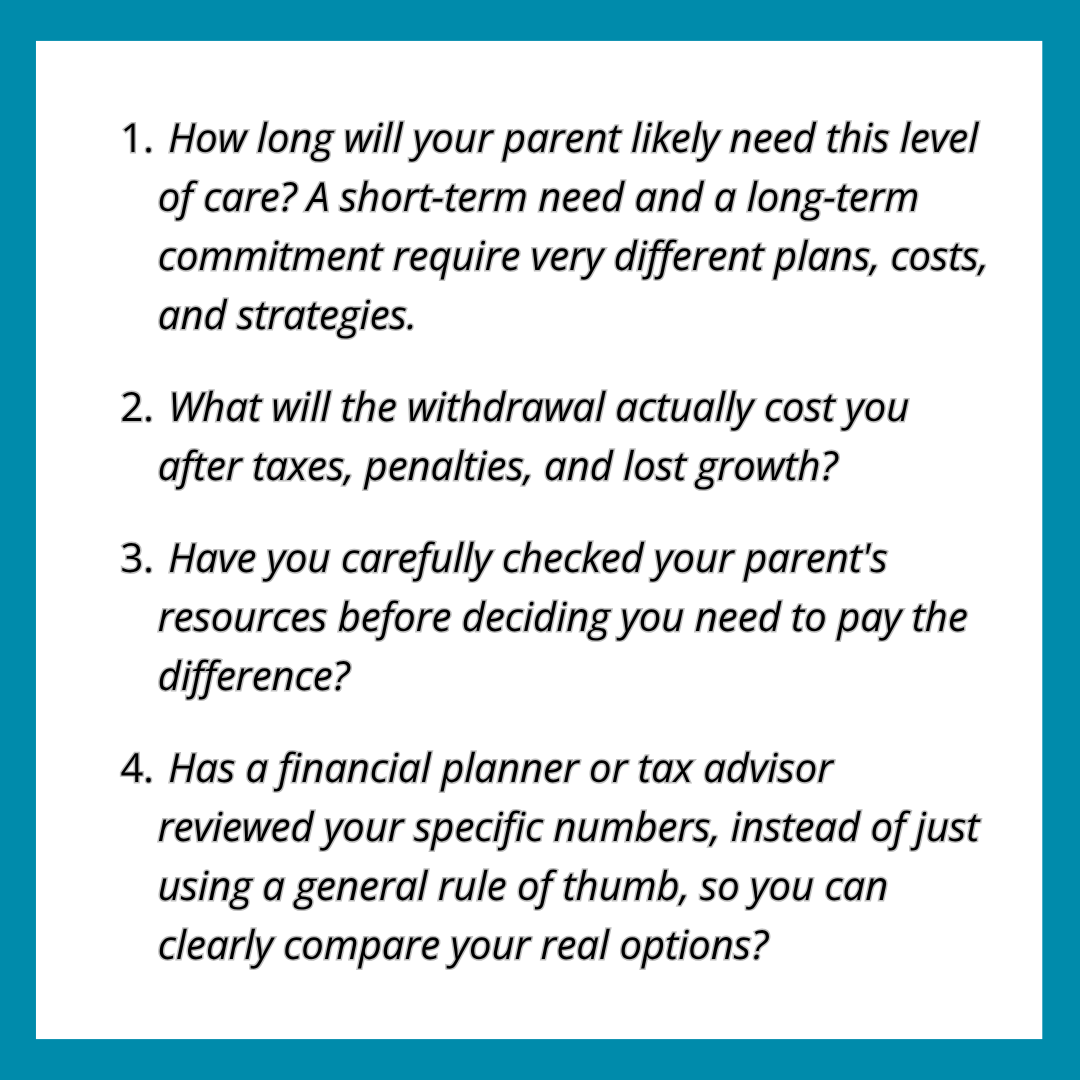
Where this connects to your care plan
Financial planning and care planning work best when you do them together. A good care plan that matches your parent’s real needs, instead of being rushed during a crisis, can sometimes lower the total cost compared to unplanned spending that adds up over time.
If you are deciding how to pay for a parent’s care, have two conversations at once: one with a financial or tax professional about what makes sense for your accounts and goals, and one with a care team about what a good plan for your parent could look like and cost over time. Our team can help with the care planning part.
Related Resources

Estate Planning Priorities: Avoid Costly Trust & Probate Mistakes
Written By Guest Author Attorney Thomas J. Drew Thomas Drew is an estate planning and elder law attorney in Fairfield and Westport, CT, specializing in trusts, wills, powers of attorney, and asset protection strategies for families. …

Managing Aging Parents’ Finances with Ease
Start the money conversations early As our parents age, conversations about money can become some of the hardest to have. But discussing your elderly parents’ finances early allows time for thoughtful planning and helps everyone adjust emotionally. It’s important to approach the conversation…

Caring for Elderly Parents
Caring for our elderly parents is one of the most personal and complex challenges we face. For some, it happens suddenly after a health crisis. Others may notice small changes in memory or mood that are easy to overlook at first. Whatever the path, caregiving asks us to balance emotional, practical…

Using Long-Term Care Insurance for Home Modifications and Medical Equipment
Coverage for home modifications and medical equipment depends on your specific Long-Term Care Insurance (LTCI) policy, the type of modification or equipment, and how each item is justified as part of your care plan. Knowing what is and isn’t covered helps you avoid costly mistakes, maximize your benefits…