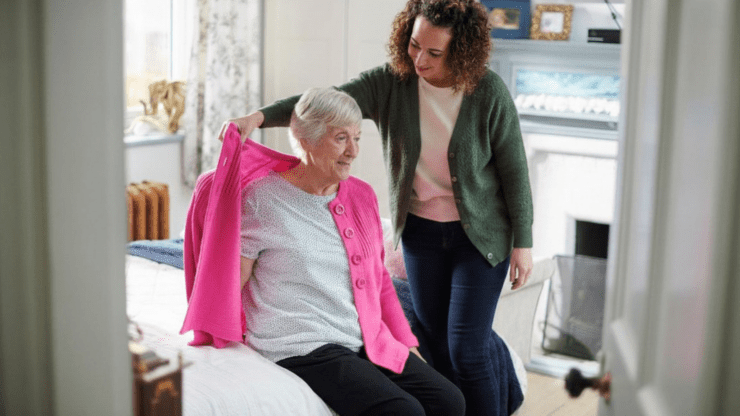
A Guide to Dressing Seniors with Dignity and Comfort
Helping someone get dressed may seem like a simple task, but for many aging adults, it can become one of the most challenging parts of the day. Changes in mobility, arthritis, Parkinson’s disease, stroke recovery, dementia, or vision loss can all make getting dressed more difficult and frustrating.
For caregivers, the goal isn’t just to get someone dressed. They want to make sure they feel comfortable, respected, and most importantly, like themselves. With some preparation and patience, getting dressed can become a moment of encouragement instead of a source of stress.
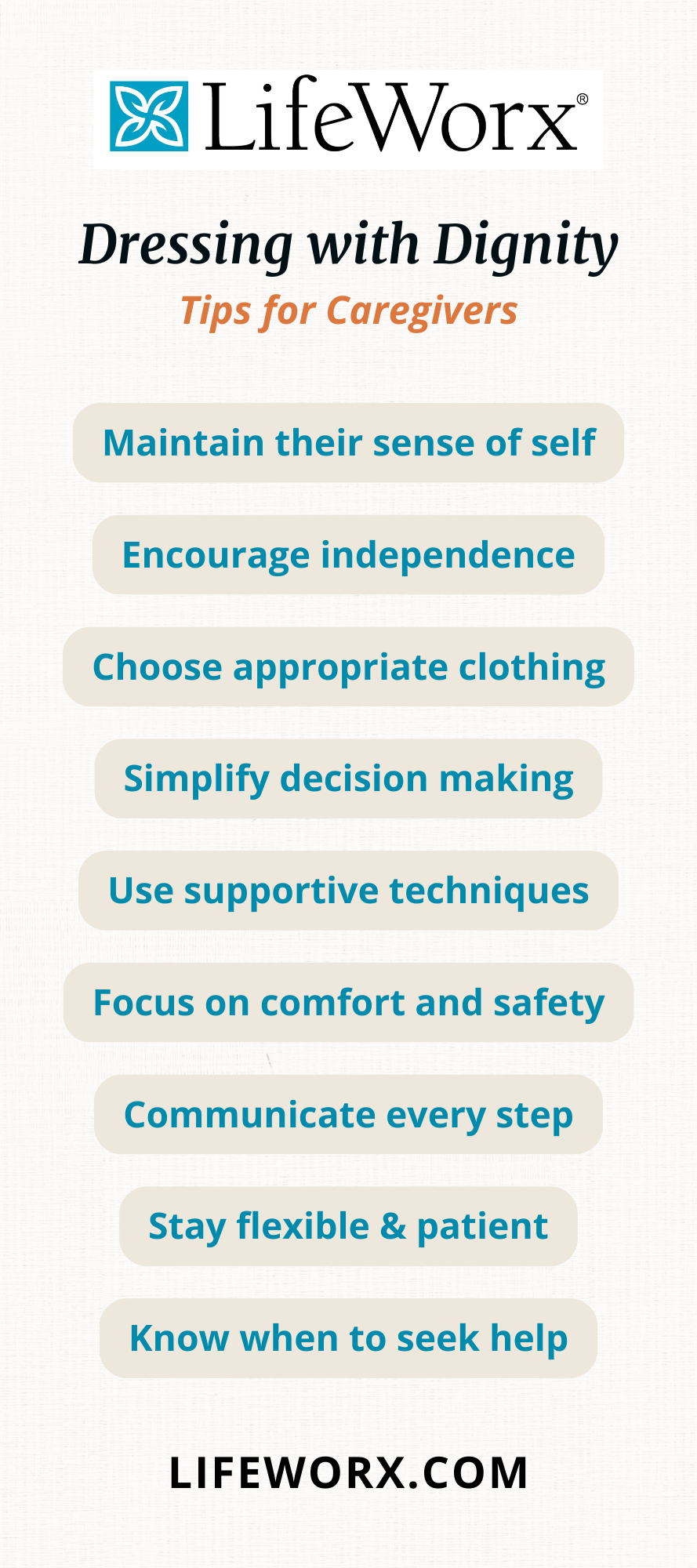
Maintain their identity and independence
Clothing can reflect personality, memories, and independence. Even if your loved one’s physicial abilities have changed, their sense of style doesn’t have to. Encourage them to express who they are and make choices that respect what they like.
Example: If your mom has always loved bright scarves or your dad wears a baseball cap every day, continue to find ways to include their signature pieces, even if other clothing needs to change.
Whenever possible, let your loved one do what they can, even if it takes a little longer. Maybe they can choose their favorite shirt, pull up their own pants, or fasten a zipper. These small steps help them feel dignified and in control, especially when many things in their life are changing.
Tip: Build extra time into your morning routine to allow time for independence, without rush.
Choose clothes that works with their needs
The right clothing can reduce frustration while making dressing safer. Adaptive clothing has come a long way and often looks just like everyday apparel. Look for features such as:
- Elastic waistbands instead of buttons or belts
- Velcro or magnetic closures for shirts
- Large zipper pulls
- Front-opening sweaters and cardigans
- Non-slip socks and supportive shoes
- Soft, breathable fabric that are easy to move in
Example: Pants with hidden Velcro closures can make bathroom trips much quicker and easier while still looking like traditional slacks.
Make decisions simpler
Big decisions can feel overwhelming, especially if your loved one is tired, frustrated, or has memory challenges. Instead of asking, “What do you want to wear?”, try gently offering two choices: “Would you like your blue sweater or your red one?” This keeps them involved without making them feel pressured.
Tip: Lay out a couple of outfits the night before, so mornings feel less rushed for everyone.
Use gentle, supportive techniques
How you assist can be just as important as what they’re wearing. When helping with dressing:
- Dress the weaker or affected arm or leg first and undress it last.
- Use sock aids, dressing sticks, or rubber grip gloves if compression socks or shoes are difficult.
- Encourage sitting instead of standing whenever possible to reduce the risk of falls.
Most importantly, work at your loved one’s pace. Slow and steady are perfectly fine. Your calm presence sets the tone and can turn a stressful moment into a chance for connection.
Communicate every step
Even if your loved one has dementia or another cognitive condition, respectful communication still matters. Speak gently as you help, letting your loved one know what you’re about to do and asking for their permission.
For example, you can say “I’m going to help you put your sweater on now. Is that okay?” Your words and tone can bring comfort and show respect, even on tough days.
Stay flexible and patient
Everyone’s needs are different, and what works today might not work tomorrow. Pain, fatigue, medications, or changes in mood can all impact how willing or able your loved one is to get dressed. Compassion and creativity can help a lot. Be open to changing routines, trying new ideas, and most importantly, being kind to yourself as you learn.
If they’re becoming frustrated:
- Take a quick break
- Try again in a few minutes
- Adjust the routine is necessary
- Celebrate your progress rather than perfection
Remember, flexibility is one of the most valuable caregiving skills someone can develop. There will be days that feel rewarding and days that feel exhausting. Your patience, empathy, and thoughtful choices really matter. Be gentle with them, and just as importantly, be gentle with yourself.
Professional caregivers can provide respectful assistance while helping your loved one maintain their routines, independence, and quality of life. If you’re feeling overwhelmed and would like to learn about how in-home care can support you, our team is here to help.
Related Resources

Adapting Communication Across the Stages of Dementia
When someone we love is diagnosed with dementia, the way we talk to them may begin to shift in subtle, often challenging ways. The level of difficulty with conversation can vary based on the stage of the disease. At first, it might just be forgetting a word or repeatedly asking the same question. Later…

How to Talk to Someone with Dementia
Dementia is more than just memory loss. As dementia progresses, a person’s ability to think, reason, and communicate is affected, making conversations difficult. Recognizing these challenges allows family members and caregivers to adjust their approach, ensuring supportive and meaningful interactions…

Dementia or Alzheimer’s? Key Differences for Families and Caregivers
Written By Guest Author Howard Fillit, MD Co-Founder and Chief Science Officer at the ADDF Dr. Fillit is a geriatrician, neuroscientist, and innovative philanthropy executive, who has led the ADDF since its founding. He also…

Recognizing the Early Signs of Dementia
Dementia is a progressive condition that affects memory, cognition, and behavior, often beginning with minor changes that can be difficult to recognize. Identifying these early warning signs is important, as early diagnosis allows for better treatment options. The LifeWorx team has put together…