
Understanding the Difference Between Hospice and Palliative Care
Facing a serious illness, whether your own or a loved one’s, can feel overwhelming. Understanding the care options available can help families make informed decisions. Both hospice and palliative care aim to improve quality of life for those with serious illnesses, but they differ in timing, focus, and eligibility.
Palliative care brings together a team of healthcare professionals like doctors, nurses, social workers, and chaplains. They work as a team to make sure the care plan matches the person’s goals and wishes. Many people receive palliative care at home, so they can stay in a comfortable and familiar place while getting help with symptoms and emotional support. Palliative care is also available in hospitals, clinics, or long-term care facilities.
Hospice is a special type of palliative care for people who are close to the end of life and are no longer receiving treatments to cure their illness. It’s usually for those expected to live six months or less. Hospice care focuses on comfort, dignity, and physical, emotional, and spiritual support for the person and their family. Hospice teams also help families with grief support after their loved one has passed away.
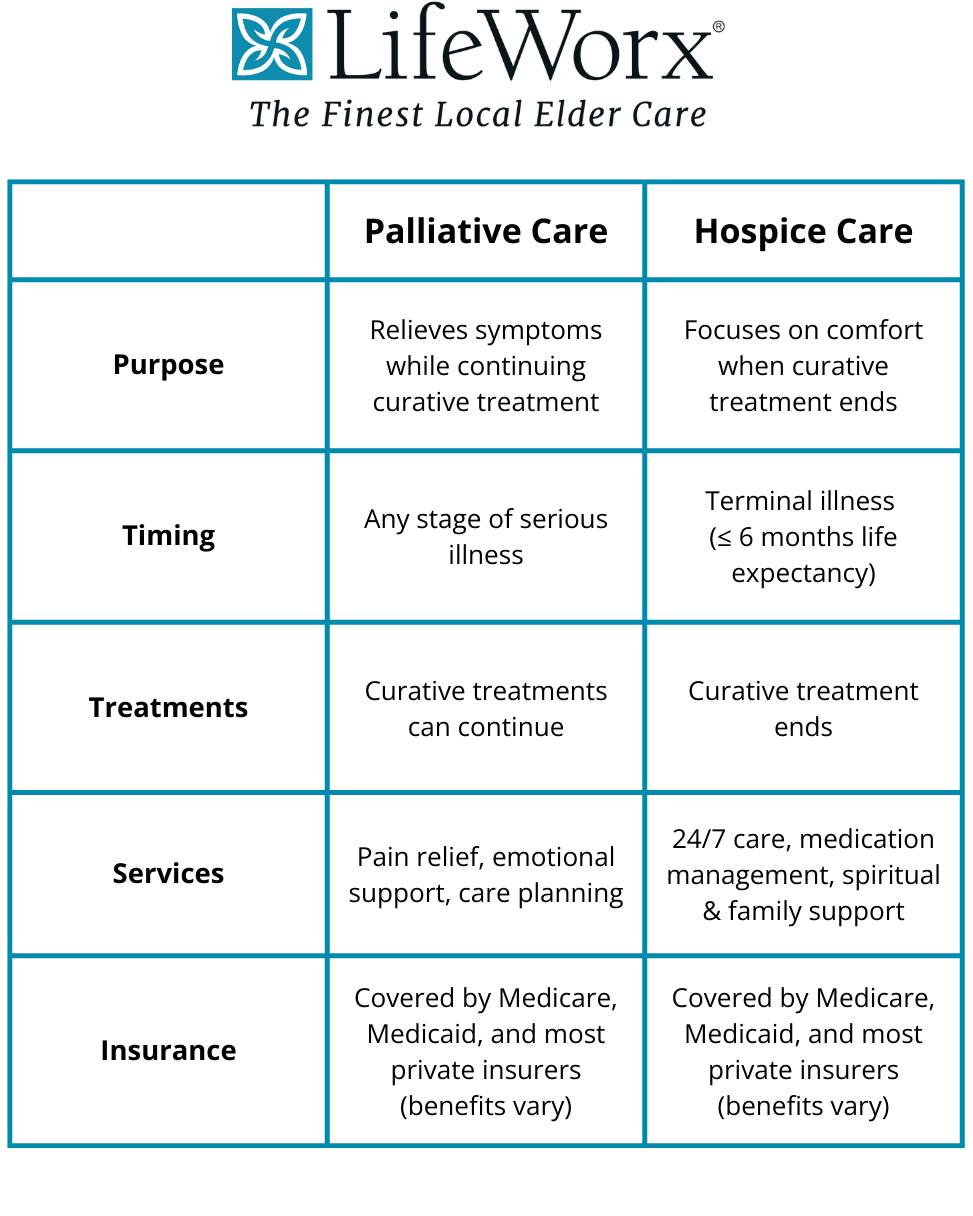
Palliative care
- When it’s for: At any stage of a serious illness, from diagnosis onward, even when a cure is still being actively pursued. Starting palliative care early has been shown to improve quality of life and can even help patients live longer.
- Main goal: To manage pain, symptoms, and side effects of serious illness and its treatments, while also addressing emotional, psychological, and practical needs. This improves overall quality of life for both patients and their caregivers.
- Eligibility: Based on a serious diagnosis, not a terminal prognosis.
Hospice care
- When it’s for: When a person is nearing the end of life, typically with a prognosis of six months or less if the illness runs its course.
- Main goal: Hospice care focuses on comfort, dignity, and support when treatments to cure the illness have stopped. It helps with physical, emotional, and spiritual needs for both patients and families, often through regular visits and around-the-clock support at home.
- Eligibility: To receive hospice care, two doctors must agree that the patient is likely to live six months or less. Hospice is paid for by Medicare, Medicaid, and most private insurance. If the patient’s health improves or stabilizes, they can leave hospice and go back to treatments for their illness. To be clear, choosing hospice doesn’t mean someone is giving up. It means choosing comfort, peace, and meaningful time with loved ones.
- At this time, curative treatment ends, and all efforts shift to comfort and quality of life. Hospice teams bring their expertise and compassion directly to the patient, whether at home, in a hospice facility, or in a nursing home. Families are considered part of the care team and receive ongoing guidance and emotional support throughout the process.
If you’d like help exploring care options or determining what best fits your family’s needs, our team is ready to assist. Connect with us today to learn how we can support your family.
Related Resources

What to Expect as a Hospice Caregiver
Hospice care is a specific kind of care designed to support an individual with a terminal illness and their family, friends, and caregivers. People with both cancer and non-cancer illnesses can be eligible to receive hospice care. Hospice seeks to administer and maintain care pain-free, giving individuals…

Understanding the Four Stages of Hospice Care: A Guide for Families
Hospice is a type of health care that focuses on the quality of life for people experiencing advanced, life-limiting illness. Hospice care is used when treatment is no longer an option and is unable to control the disease. Hospice care provides compassionate care for people in the last phases of an…

Understanding In-Home Care
As our loved ones age, making sure they receive the best care possible becomes a top priority. For many families, in-home care offers the best solution by providing personalized and professional assistance in the comfort of one’s home. At LifeWorx, our services include 24-hour care, companion care…

What Are The Different Types of In-Home Caregivers?
When it comes to finding adequate care for yourself or your loved one, you’ll find there are a lot of options. All caregivers have the desire to help others in common, there are several types of caregivers and it’s essential to know the difference between the different types of caregivers that are…