
Assisted Living vs. Home Care: Understanding the Best Path for Personalized Support

When someone you love needs more support to stay safe, comfortable, and engaged, it’s natural to feel overwhelmed by the choices. Assisted living and home care are two of the most common solutions, but they offer very different experiences. Understanding the key differences and honestly thinking about your family’s unique needs can help you make a choice rooted in dignity, safety, and peace of mind.
What does assisted living provide?
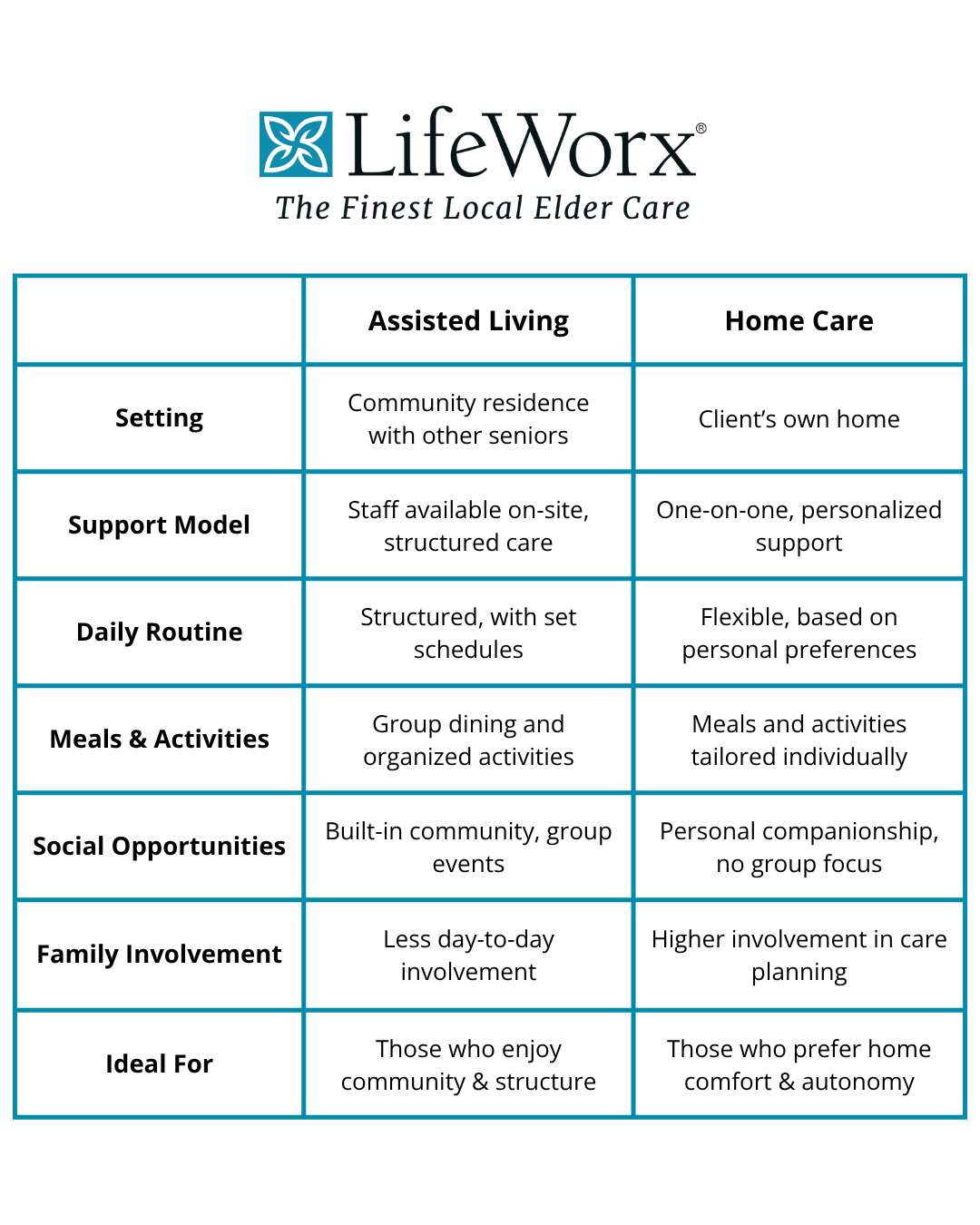
Assisted living communities offer housing, meals, social activities, and assistance with daily tasks such as bathing, dressing, and medication reminders. They are meant for adults who need regular support but don’t need the high level of medical care found in a nursing home. Some key characteristics include:
- A structured daily routine
- On‑site staff available throughout the day
- Group dining and scheduled activities
- A built‑in community environment
This structure can be comforting for people who like routine or find it helpful to have many services in one place.
What does home care provide?
Home care offers one‑on‑one support delivered in the client’s own home. Care can range from a few hours a week to 24‑hour coverage. Services typically include personal care, mobility assistance, meal preparation, transportation, and companionship.
Home care agencies can also support individuals who technically qualify for assisted living but prefer to remain at home. This may include:
- Increasing caregiver hours
- Providing overnight or live‑in support
- Offering specialized dementia or cognitive‑care services
- Creating a personalized care plan that mirrors or exceeds assisted living support
Level of care: Structure vs. Personalization
Assisted living offers a consistent, community‑based model. For example, a resident with mild mobility challenges may appreciate having meals prepared, housekeeping handled, and staff nearby for safety.
Home care, on the other hand, is shaped by the individual’s preferences. Someone who likes to wake up late, eat breakfast at home, and spend afternoons in the garden can keep that routine with help from a caregiver. This flexibility is especially helpful for people who feel anxious or confused when their routines change.
Cost considerations
Assisted living typically charges a monthly fee that includes housing, meals, utilities and housekeeping, activities, and basic personal care. Usually, additional care needs can increase the monthly rate.
Home care is billed hourly, which allows families to scale services up or down. For individuals who need only part‑time support, home care can be more cost‑efficient. For those who need extensive care, costs may rise, but LTCI policies often help cover home care services, depending on benefit triggers and daily or monthly limits.
Example: A client with LTCI may receive 6 hours of care per day covered by their policy, allowing them to remain at home safely without paying the full out-of-pocket cost.
Independence and lifestyle
Assisted living offers a sense of community, but residents need to follow the facility’s routines. This setup suits people who like group activities and having a set schedule.
Home care helps people stay as independent as possible. Clients keep their own space, daily habits, and personal choices. For example, someone who loves to cook but needs help with shopping or meal preparation can keep doing what they enjoy with a caregiver’s help.
Safety and supervision
Assisted living communities include safety features such as grab bars, emergency call systems, and staff on-site. These features can give families peace of mind if they worry about falls or wandering.
Home care safety relies on the caregiver and the home setup. LifeWorx helps families find changes that make the home safer, such as better lighting or adding grab bars. For people who need more supervision, we can arrange live-in or 24-hour care, giving constant, one-on-one support.
Social life and emotional well‑being
Assisted living offers built‑in social opportunities such as group meals, exercise classes, outings, and different clubs and interest groups. This can be ideal for individuals who enjoy structured social engagement.
Home care offers closer, more personal companionship. For people who find group settings overwhelming, one-on-one time can feel more comfortable. For example, someone with early-stage dementia may do better with a familiar caregiver who gives calm, personalized support.
Family involvement
In assisted living, families coordinate with staff but are less involved in daily care. With home care, families are often more involved in planning and communicating. Many people value the openness and hands-on role that home care provides.
Flexibility and scalability
Assisted living has set levels of care, and if someone’s needs grow, they might need to move to another unit or community.
Home care is very flexible. Hours can go up for a short time after a hospital stay or increase for good as needs change. For example, someone recovering from surgery might start with 12 hours of care each day and gradually cut back to 4 hours as they get stronger.
Quality of life: The heart of the decision
The right choice depends on the individual’s personality, health needs, desire for independence, comfort with change, financial resources, and long-term care insurance benefits. Some people do well in the community setting of assisted living. Others feel safest and most respected at home, especially when a home care agency can offer as much or even more support than an assisted living facility.
Both assisted living and home care provide important support, but they fit different lifestyles and needs. To help you decide which setting is best for your loved one, consider the following questions:
- Does your loved one thrive in a social, structured environment, or do they prefer the comfort and familiarity of home?
- Are they comfortable with adapting to new routines, or do they become anxious about change?
- How much support do they need with daily activities, and can that be provided safely at home?
- Is ongoing family involvement important, or would your loved one benefit from more independence?
- What are your financial resources and long-term care insurance options?
Taking time to honestly answer these questions and even visiting local assisted living communities or trying a short-term home care arrangement can clarify what feels right for your family, even if it takes some extra effort.
If you’d like personal guidance, contact us today to speak with a member of our Care Team. We’re here to listen, answer your questions, and help you take the next step.
Related Resources

Choosing the Right Long-Term Care Option
Long-term home care is emerging as a preferred alternative to institutional care settings like assisted living facilities. Aging in place can provide emotional, physical, and psychological benefits when approached with careful planning and consideration. In-home care compared to assisted living facilities Long-term…

Understanding In-Home Care
As our loved ones age, making sure they receive the best care possible becomes a top priority. For many families, in-home care offers the best solution by providing personalized and professional assistance in the comfort of one’s home. At LifeWorx, our services include 24-hour care, companion care…

Discover the Advantages of Round-the-Clock Care
As we age, the need for assistance often increases, making 24/7 care an essential consideration. Whether a result of mobility issues, cognitive function, chronic illness, or personal preferences, round-the-clock care offers peace of mind for families while enhancing the overall well-being of the elderly…

Caring for Elderly Parents
Caring for our elderly parents is one of the most personal and complex challenges we face. For some, it happens suddenly after a health crisis. Others may notice small changes in memory or mood that are easy to overlook at first. Whatever the path, caregiving asks us to balance emotional, practical…