Adapting Your Home for a Spouse with Parkinson’s-Related Balance Issues

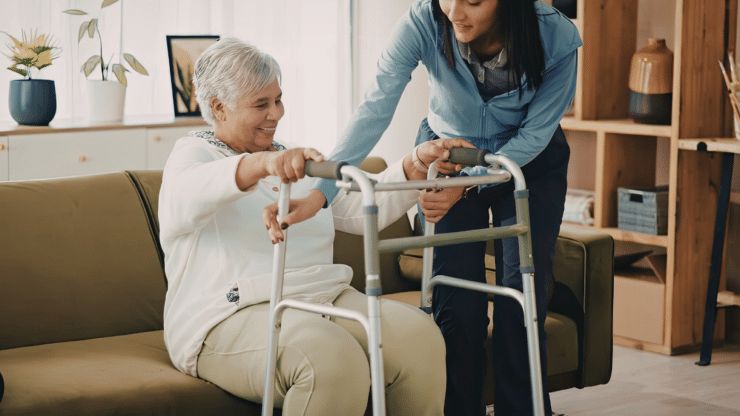
Balance problems are often an early sign that your home may need changes for a spouse with Parkinson’s disease. Areas that once felt safe, such as hallways, bathrooms, or bedrooms, can become harder to navigate as mobility changes. Fortunately, most of the home modifications that improve safety and accessibility are practical, affordable, and don’t require major renovations.
Start with the whole-home basics
Taking the first steps to adapt your home may feel overwhelming, but small, strategic changes throughout your living space can make daily life safer and more comfortable for your spouse. Here’s how to get started:
- Clear clutter from walkways to reduce tripping hazards. Remove loose cords, low furniture, and throw rugs. If you need to keep any rugs, secure the edges with non-slip backing, or consider removing them altogether to reduce fall risk.
- Choose safe flooring. Low-pile carpet and non-slip, matte surfaces work best for people with Parkinson’s. Avoid shiny floors, thick carpets, or busy patterns, as these can cause confusion or freezing episodes.
- Improve lighting throughout the home. Bright, even lighting reduces shadows that can affect depth perception and increase fall risk. Install motion-sensor lights or nightlights, especially along the path from the bedroom to the bathroom, to enhance nighttime safety.
- Make sure furniture is stable. Chairs and other often-used pieces should be sturdy, not swivel, and have armrests. The seat height should help your spouse stand up easily without needing to push off multiple times.
Small changes can make a big difference. For example, swapping a decorative hallway rug for a non-slip mat and choosing a coffee table with rounded, padded edges helps prevent falls, all without major renovations.
Bathroom: The room with the highest fall risk
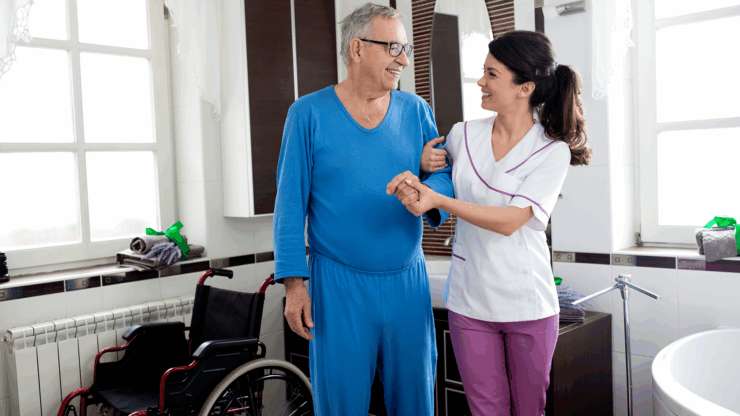
Bathrooms are the most common location for falls. Wet, slippery surfaces and the challenges of getting on and off the toilet or in and out of the shower make bathroom safety a top priority for Parkinson’s caregivers.
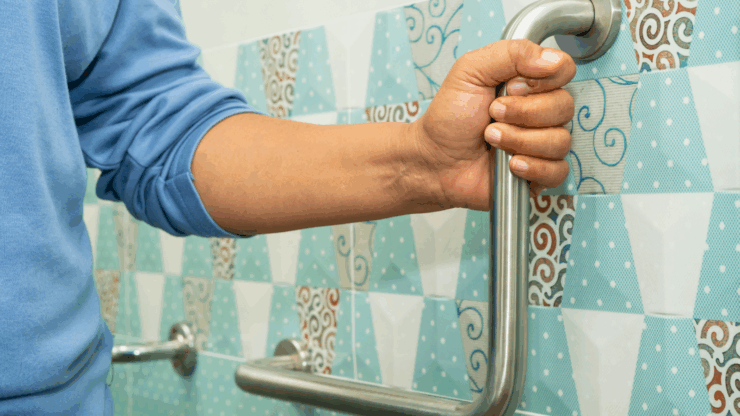
- Install ADA-compliant grab bars near the toilet and inside the shower to provide secure support. Unlike towel bars, grab bars are designed to safely assist people who have balance issues.
- Upgrade to a zero-threshold or roll-in shower with a fold-down bench or shower seat to increase accessibility and decrease the likelihood of slips and falls.
- Add a raised toilet seat to make transferring on and off the toilet easier and safer. This simple modification supports independence and reduces caregiver strain.
- Place non-slip bath mats inside and outside the shower or tub to help prevent slipping. Upgrade to single-handle faucets for easier use if grip strength or dexterity is limited.
Kitchen
The kitchen is the heart of the home, but it’s also filled with potential hazards for someone with Parkinson’s. Here are some practical ways to make this space safer and accessible:
- Store frequently used kitchen items on lower or middle shelves for easy access.
- Replace cabinet knobs with easy-to-grip handles to accommodate limited dexterity in Parkinson’s patients.
- Store pots, pans, and spices close to the stove to minimize reaching and prevent accidents in the kitchen.
- Use weighted utensils and adaptive cutting boards if tremors affect grip to make food preparation safer.
Bedroom
A well-adapted bedroom can help your loved one get quality rest and reduce nighttime risks. Consider these strategies to create a safe, comfortable sleep space:
- If stairs are a balance concern, consider moving the bedroom to the ground floor to lower the risk of falls.
- Add a bed rail or floor-to-ceiling transfer pole to make getting in and out of bed safer for your spouse and reduce caregiver strain.
- Install motion-sensor lighting near the bed and along the path to the bathroom to make nighttime navigation safer.
How you can help, day to day
Home changes help lower risks, but your daily caregiving habits are just as important for keeping your spouse with Parkinson’s safe and supported.
- Encourage your spouse to move at their own pace. Rushing, especially when standing or turning, can lead to falls. Provide steady support only when truly needed.
- Recognize freezing episodes, when your spouse suddenly becomes “stuck” mid-step. Use strategies such as counting out loud or encouraging bigger steps, which are proven physical therapy techniques for Parkinson’s mobility.
- Pay attention to medication timing. Many people with Parkinson’s move best during their “on” periods between doses. Try to schedule stairs, outings, or more demanding tasks during these times to help prevent falls.
- Watch for medication side effects, including dizziness, confusion, or drowsiness, which can raise fall risk. Notify your spouse’s care team of any concerning symptoms immediately.
Where professional support fits in
It’s important to know your limits as a caregiver. While home changes help lower risks, professional home care can give your loved one extra support to stay safe, independent, and comfortable. Professional caregivers can help with medication reminders, tricky transfers, daily routines, and companionship. As your spouse’s needs change, think about in-home care to help them stay safe at home. Review your safety checklist often and talk with your spouse’s doctor, physical therapist, or occupational therapist to keep your plan up to date.
If you’re not sure where to begin, an in-home safety evaluation can help you focus on the most important changes. Contact us today to get started.
Related Resources

7 Steps to Improving Bath Safety for Seniors
January is National Bath Safety Month, and the idea is to promote awareness to prevent potential hazards that are in our bathrooms and dangers they present to everyone, but especially to children and the elderly. One of the most important things caregivers can do to help aging adults maintain independence…
Creating a Safer Bathroom for Aging Adults
Many injuries in the home happen from falls, especially in the bathroom, which can be a worry for families and caregivers. It’s completely understandable to feel overwhelmed by the responsibility of keeping your aging loved ones safe. However, with a few simple adjustments and reliable safety products…
How to Prevent Falls in The Bathroom
January is National Bath Safety Month, a reminder to assess bath safety and to take proper precautions to prevent falls while in the bathroom. A fall can be an unpleasant situation for anyone. A serious fall can have long-lasting physical and psychological consequences. The bathroom is particularly a…

Elderly Fall Prevention
The elderly population faces a heightened risk of falls, which can result from various factors. These include decreased muscle strength, reduced mobility, impaired vision, medication side effects, and environmental hazards. To effectively prevent falls, it’s crucial to identify and understand the physical…